

Fast‑Track or Illusion? What the USPTO’s New Tools Mean for Beauty Brands
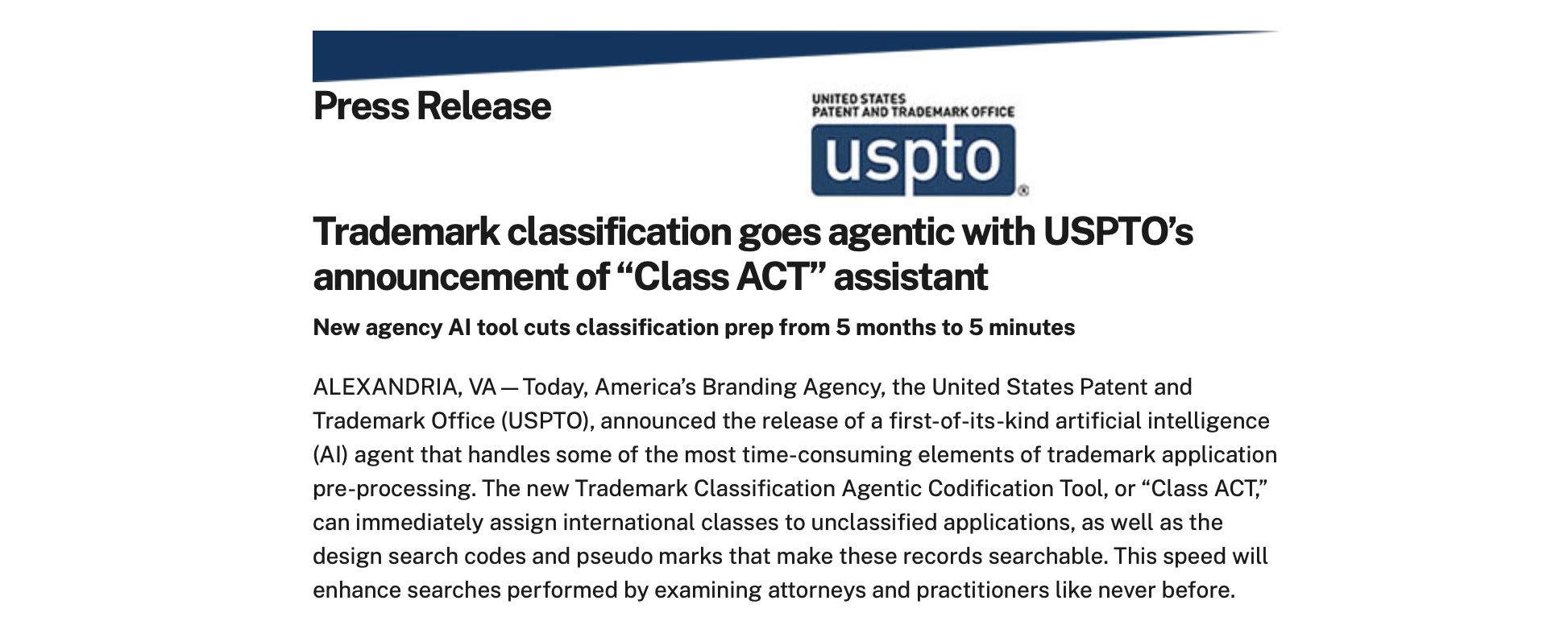
Source: https://www.uspto.gov/
Navigating the legal landscape of the beauty industry requires agility. Securing your brand's identity is the most critical step before launching. Historically, obtaining a trademark from the United States Patent and Trademark Office (USPTO) has been a notorious bottleneck for independent beauty founders.
To combat this, the USPTO recently launched new tools specifically designed to tackle trademark backlogs and streamline application timelines.
The early data looks promising, but what does this sudden acceleration actually mean for beauty brands on the ground? Let’s pull back the curtain on how these updates are playing out in real-time.
The Reality of the New USPTO Timelines
The USPTO’s new initiatives focus on easing the administrative frontend of filings to get applications in front of reviewing attorneys faster than ever.
From our perspective in the industry, the initial speed of this rollout is genuinely shocking. Look at how dramatically the wait times for reviewing attorney assignments have shifted based on recent filing experiences:
Past Filings: Independent indie brands routinely waited anywhere from 7 to 12 months just for an attorney assignment.
Current Filings (Spring 2026): Brand owners are seeing reviewing attorneys assigned in as little as 3 months.
We experienced this firsthand. We recently filed an "Intent-to-Use" (ITU) trademark application for our new cosmetics brand, POST GOODBYE, at the end of March 2026. Expecting a long administrative limbo, we were amazed when a reviewing attorney was assigned to our file just three months later.
The Catch: Frontend Speed vs. Backend Backlogs
While a three-month turnaround on a reviewing attorney assignment is a massive win for the beauty sector, indie founders must remain cautious.
What this actually means for brands is that while the digital "intake line" is moving faster, the actual legal scrutiny hasn't changed.
The USPTO's new tools handle preliminary logistics, but they cannot replace human legal reasoning. Once an application reaches an assigned attorney, the deep substantive review begins. The attorney must still manually check for conflicting marks and evaluate potential consumer confusion in a highly saturated beauty market.
Because the front end of the system is now moving applications at record speed, a secondary bottleneck is highly possible. The actual examination and final approval stages—the parts that require real human review—could still experience delays.
Navigating the Trademark Process Solo
For many emerging beauty brands, hiring a lawyer isn’t always financially feasible right out of the gate. It is entirely possible to file a trademark independently, as we did, but navigating the system alone means you must monitor your application with extreme vigilance.
If you are managing your own beauty trademark journey, keep these focus areas in mind:
Watch for Office Actions: Because applications are being assigned faster, you might receive refusal or clarification letters much sooner than anticipated.
Prepare for the "Intent-to-Use" Transition: Getting assigned an attorney is just step one. You will still need to submit a formal Statement of Use (SOU) along with real-world product packaging once you officially launch.
Ensure Absolute Distinctiveness: Before celebrating your quick attorney assignment, ensure your brand name is legally distinct to avoid a "likelihood of confusion" refusal.
Final Thoughts
The USPTO’s push to clear backlogs is a massive step forward for efficiency, giving beauty founders a faster look into the viability of their brand names. However, frontend speed does not guarantee a seamless path to registration. Navigating these shifting timelines requires strategic planning to ensure your brand remains fully protected.
Amy Suh | Founder @Wondrous Company
